
Cold weather is the number one enemy of diesel engines. When temperatures drop below freezing, fuel gels, batteries lose power, and glow plugs get pushed to their limit. If your diesel truck won’t start in the cold, you’re losing money every minute it sits. The main causes are gelled fuel, weak batteries, failed glow plugs, and thickened oil. Most cold-start problems are preventable with the right fuel, a block heater, and healthy batteries. This guide covers exactly why diesels struggle in cold weather, how to get yours running now, and how to make sure it never leaves you stranded again.
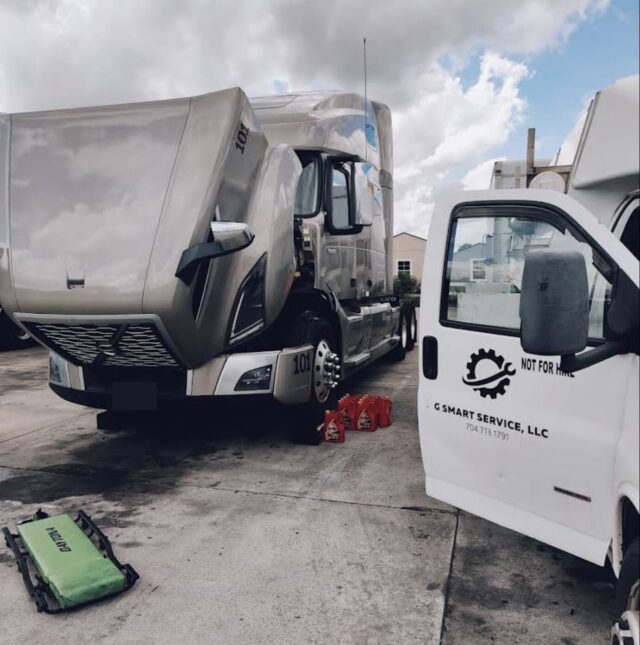
Why a Diesel Truck Won't Start in the Cold
Diesel engines rely on heat and compression to ignite fuel. Cold weather attacks every part of that process. Here’s what goes wrong:
Fuel gelling. This is the biggest cold-weather killer. Diesel fuel contains paraffin wax that stays liquid at normal temperatures but crystallizes when it gets cold. Around 32°F, wax starts to form. By 10 to 15°F, untreated diesel can gel completely, clogging fuel filters and lines so no fuel reaches the engine.
Weak batteries. Cold temperatures reduce battery capacity dramatically. At 32°F, a battery loses about 35% of its cranking power. At 0°F, it can lose up to 60%. Diesel engines need serious amperage to crank their high-compression engines, so a marginal battery that worked in summer fails in winter.
Failed or weak glow plugs. Glow plugs heat the combustion chamber so fuel ignites on a cold start. When they fail, the chamber stays too cold for combustion. The engine cranks but won’t fire, or fires roughly and produces white smoke.
Thickened engine oil. Cold oil becomes thick and resists flow. This makes the engine harder to crank and slows lubrication on startup. Using the wrong viscosity oil for winter makes cold starts much harder.
Low compression issues. Worn engines with reduced compression struggle more in cold weather because they generate less heat during cranking. A truck that starts fine in summer may reveal compression problems when it gets cold.
For a full no-start diagnosis in any weather, see truck won’t start: 7 common causes
Diesel fuel cold flow properties are regulated by ASTM D975, the standard specification for diesel fuel.
What to Do When Your Diesel Truck Won't Start in the Cold
Follow this process to get running as fast as possible:
- 1 Check the batteries first. Headlights bright or dim? Test voltage (12.6V+ per battery). Jump start if needed.
- 2 Wait for the glow plugs. Turn key to ON, wait for indicator to cycle off. In extreme cold, cycle two or three times.
- 3 Check for fuel gelling. Good batteries + working glow plugs but no start = suspect gelled fuel. Inspect the filter.
- 4 Warm the fuel system. Move to a heated shop. Apply heat to filter and lines safely, never with an open flame.
- 5 Add anti-gel treatment. Pour emergency anti-gel additive into the tank. Give it time to circulate.
- 6 Use starting fluid with caution. Many glow plug diesels prohibit ether. Check your engine manual first.
- 7 Plug in the block heater. Two to four hours of block heater time dramatically improves startability.
- 8 Call a mobile mechanic if stuck. Heated equipment and diagnostics can get you started.
Cold Weather Diesel Starting: Temperature Guide
| Temperature | Risk Level | What You Need |
|---|---|---|
| Above 40°F | Low | Normal operation, healthy batteries |
| 32°F to 40°F | Moderate | Winter fuel blend recommended |
| 15°F to 32°F | High | Winter blend, anti-gel additive, glow plugs working |
| 0°F to 15°F | Severe | Block heater, treated fuel, strong batteries |
| Below 0°F | Extreme | Block heater essential, fuel additive, fuel heater |
* Most stations switch to winter blend diesel in cold months. Fuel bought before a cold snap may be summer blend that gels early.
Key point: Most fuel stations switch to winter blend diesel in cold months, which resists gelling to much lower temperatures. But if you fueled up before a cold snap or in a warmer region, you may have summer fuel that gels early.
How to Prevent Cold-Start Problems
Prevention is far cheaper than an emergency service call. Do these before winter:
- Use winter blend diesel. Fill up at high-volume stations in cold regions. They sell treated fuel.
- Add anti-gel treatment proactively. Treat before it gets cold, not after it gels.
- Install and use a block heater. Plug in overnight or start 2 to 4 hours before. Best cold-weather investment.
- Test batteries before winter. Load-test in fall. Replace weak ones. Cold reveals every weakness.
- Switch to winter-grade oil. Use manufacturer-recommended winter viscosity. Thinner cold oil cranks easier.
- Keep the fuel tank full. Less room for condensation reduces water in fuel that can freeze.
- Replace fuel filters before winter. A partially clogged filter gels and blocks completely in cold.
- Park inside when possible. Even an unheated garage stays warmer than open air.
FAQ
At what temperature does diesel fuel gel? Untreated diesel starts forming wax crystals around 32°F. It typically gels enough to clog filters between 10 and 15°F. Winter blend diesel and anti-gel additives lower this point significantly, often below minus 20°F.
Why does my diesel truck crank but not start in cold weather? The most common reasons are gelled fuel blocking the fuel system and failed glow plugs that can’t heat the combustion chamber. Check the glow plug indicator and inspect the fuel filter for gelling.
Can I use starting fluid on a diesel engine? Only if your engine manual permits it. Many diesels with glow plugs prohibit ether-based starting fluid because it can cause severe engine damage or explosions. Check before using.
How long should I plug in a block heater? Two to four hours is ideal for most conditions. In extreme cold (below 0°F), longer is better. A timer that starts the heater a few hours before your first start saves electricity and guarantees an easy start.
Do I need to warm up my diesel before driving in cold weather? Let it idle a few minutes to circulate oil and build some heat, but excessive idling wastes fuel and can trigger DPF issues. Drive gently until the engine reaches operating temperature rather than idling for a long time.
What kind of batteries are best for cold-weather diesel starting? Look for batteries with high cold cranking amps (CCA) rated for your engine. Diesel trucks typically need 750 to 1,000+ CCA per battery. AGM batteries perform better in extreme cold than standard flooded batteries.
When a diesel truck won’t start in the cold, the culprit is almost always gelled fuel, weak batteries, or failed glow plugs. The fix is heat, treated fuel, and healthy batteries. But the smarter play is prevention: winter blend diesel, a block heater, and fall battery testing keep you running all winter. G Smart Service LLC handles cold-weather diesel starting problems in Monroe and the Charlotte, NC area. Glow plugs, fuel system service, battery testing, and mobile repair.
Call (980) 318-0425 or visit gsmartservice.com.