
You release the parking brake, build full air pressure, and try to pull away, but the trailer won’t roll. The wheels are locked or dragging, smoke is coming off the drums, and you’re not going anywhere. Trailer brakes not releasing is one of the most common roadside issues for semi trucks, and driving on dragging brakes destroys drums, shoes, seals, and tires fast. The usual causes are a stuck spring brake, air system leak, frozen brake components, or a faulty relay valve. Most fixes cost $150 to $800 depending on the failed part. This guide walks you through every cause, how to diagnose it, and what the repair costs.
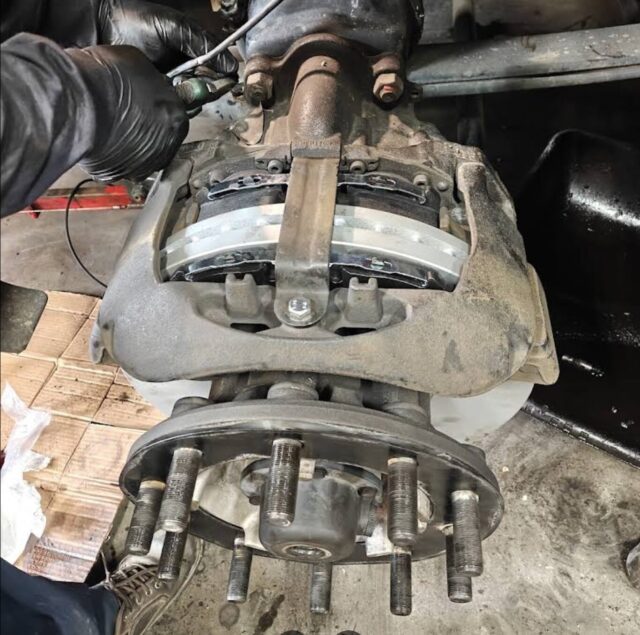
Why Trailer Brakes Get Stuck: 6 Common Causes
Each cause has a different symptom and a different fix. Here’s what mechanics find most often when trailer brakes are not releasing:
1. Stuck or broken spring brake (parking brake). The spring brake inside the brake chamber uses a powerful spring to hold the brakes when air pressure is removed. If the chamber diaphragm tears, the spring corrodes, or the pushrod seizes, the brake locks on and won’t release even with full air pressure. This is the number one reason for trailer brakes not releasing.
2. Air line leak or blockage. Air must travel from the tractor through the glad hands and trailer air lines to each brake chamber. A cracked hose, damaged glad hand seal, frozen moisture in the line, or a kinked hose can prevent air from reaching the chambers. Without air pressure, spring brakes stay engaged by design.
3. Frozen brake components. In cold or wet conditions, water gets into brake drums, between shoes and drums, or inside air lines. When it freezes, the brakes physically lock in place. This is especially common after washing the truck or parking overnight in below-freezing temperatures.
4. Faulty relay valve. The trailer relay valve controls how quickly air reaches the brake chambers. If the valve sticks internally or the exhaust port clogs, it may not deliver enough air pressure to release the spring brakes. This is a less obvious cause that many drivers overlook.
5. Worn or misadjusted slack adjusters. If the slack adjuster is over-extended or the automatic adjuster has failed, the pushrod may be at maximum stroke. The brake shoes press against the drum even when the system signals a release. This also triggers DOT out-of-service violations. Over-extended pushrods are a leading out-of-service violation per 49 CFR Part 396.
6. Damaged or corroded brake chamber. Rust, physical impact, or age can damage the brake chamber housing. A dented chamber can trap the pushrod. Corroded internal components create friction that prevents smooth operation. Chambers on trailers are exposed to road spray and salt, making corrosion a common problem.
Trailer Brakes Not Releasing: Repair Cost Breakdown
| Cause | Common Repair | Parts | Labor | Total |
|---|---|---|---|---|
| Stuck spring brake | Chamber replacement | $60 to $200 | $100 to $250 | $160 to $450 |
| Air line leak | Hose or glad hand replacement | $15 to $80 | $75 to $200 | $90 to $280 |
| Frozen brakes | Thaw and inspect | $0 to $100 | $100 to $250 | $100 to $350 |
| Faulty relay valve | Relay valve replacement | $80 to $250 | $100 to $250 | $180 to $500 |
| Worn slack adjuster | Slack adjuster replacement | $40 to $100 | $75 to $200 | $115 to $300 |
| Damaged brake chamber | Chamber + hardware | $60 to $200 | $100 to $250 | $160 to $450 |
| Multiple chambers (full axle) | All chambers on one axle | $180 to $600 | $300 to $600 | $480 to $1,200 |
Most single-wheel fixes cost under $500. If the problem affects an entire axle, expect $500 to $1,200 for a complete brake overhaul.
Step-by-Step Diagnosis When Trailer Brakes Are Not Releasing
Follow this process to narrow down the cause before calling a mechanic:
- 1 Check air pressure. Both primary and secondary systems should read 100 to 130 PSI. Low pressure = spring brakes stay locked.
- 2 Inspect glad hand connections. Are both lines (service and emergency) connected and sealed? A disconnected emergency line locks all spring brakes.
- 3 Push the trailer parking valve in. Red octagon button on dash. If it pops back out, there’s an air leak in the trailer supply line.
- 4 Listen for air leaks. Walk the trailer with engine running and full pressure. Hissing at a chamber, line, or valve points to the problem.
- 5 Check for heat. If you drove with dragging brakes, drums will be extremely hot. Hot on one wheel = that wheel’s brake is stuck.
- 6 Inspect the pushrod. At the stuck wheel, check if the pushrod is fully extended. If it won’t retract with air, the chamber or spring brake has failed.
- 7 Test the relay valve. Apply and release brakes while watching chambers. Uneven response = relay valve or blocked line section.
- 8 Check for ice. In cold weather, tap drums with a hammer. Never use an open flame near brake components.
Preventing Trailer Brakes From Getting Stuck
Most brake lockups are preventable with basic maintenance:
- Drain air tanks daily (tractor and trailer) to remove moisture
- Replace air dryer desiccant on schedule (every 200,000 to 300,000 miles or 3 years)
- Inspect brake chambers for corrosion at every PM service
- Replace glad hand seals when cracked or worn
- Verify slack adjuster function during pre-trip inspections
- Use air line antifreeze in winter months
- Avoid high-pressure washing of brake drums before freezing temps
- Replace brake chambers proactively at 5 to 7 years regardless of condition
FAQ
Why are my trailer brakes not releasing? The most common cause is a stuck spring brake chamber. Other frequent causes include air line leaks, frozen components, a faulty relay valve, or a worn slack adjuster. Start by checking air pressure and glad hand connections.
Can I drive with trailer brakes dragging? No. Dragging brakes generate extreme heat (600°F+) that can warp drums, destroy seals, ignite tire rubber, and cause a fire. If the brakes won’t release, stop and fix the problem before moving.
How do I manually release a stuck trailer spring brake? Most brake chambers have a caging bolt on the back. Turning this bolt with a wrench compresses the spring and releases the brake mechanically. This is an emergency procedure only. The chamber must be repaired or replaced before returning to service.
How much does it cost to fix trailer brakes that won’t release? A single chamber replacement costs $160 to $450. Air line repairs run $90 to $280. Relay valve replacement is $180 to $500. A full axle brake overhaul costs $480 to $1,200.
How often should trailer brake chambers be replaced? Most shops recommend replacing brake chambers every 5 to 7 years as preventive maintenance. Chambers exposed to heavy salt, moisture, or corrosive environments should be inspected annually and replaced sooner.
Can cold weather cause trailer brakes not releasing? Yes. Moisture in air lines freezes and blocks airflow. Water between brake shoes and drums freezes the components together. Drain air tanks daily and use air line antifreeze to prevent winter lockups.
Trailer brakes not releasing usually comes down to a stuck spring brake, an air leak, or frozen components. Most repairs cost $100 to $500 per wheel and take 1 to 2 hours. The key is diagnosing the right cause before replacing parts. Use the step-by-step process above, and invest in basic prevention to avoid repeat failures. G Smart Service LLC fixes trailer brake problems in Monroe and the Charlotte, NC area. Mobile and shop service available. Call (980) 318-0425 or visit gsmartservice.com.
G Smart Service LLC | Truck & Trailer Repair Shop | 3501 N Rocky River Rd, Monroe, NC 28110